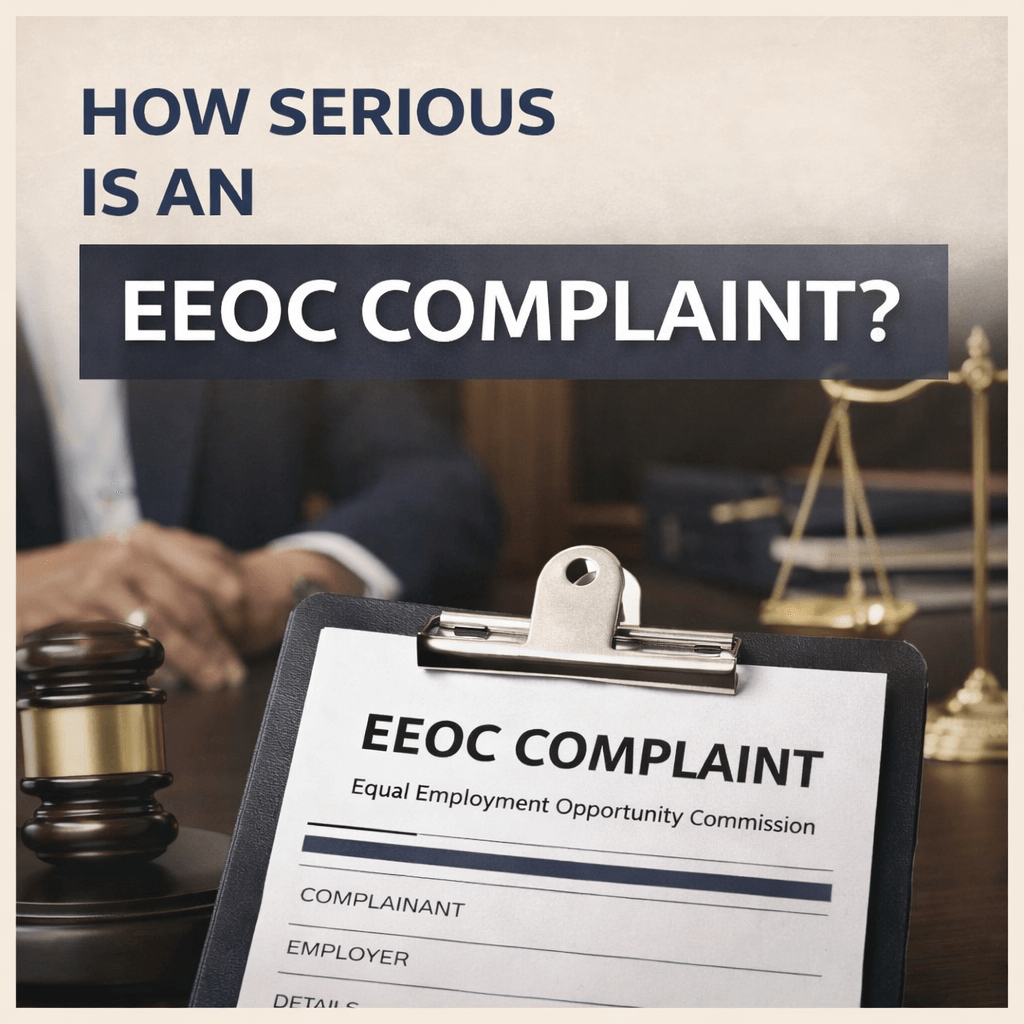
How Serious is an EEOC Complaint?
Background
A complaint filed with the Equal Employment Opportunity Commission (EEOC) is more than a formality—it can launch investigations, document demands, and high-stakes litigation. In New York, these matters often intersect with the New York State Human Rights Law (NYSHRL), subjecting employers to overlapping federal and state standards that are broader and more employee-protective than federal law alone. For employers, municipalities, developers, and any organization with hiring or compliance responsibilities, a single charge can expose systemic issues in hiring, discipline, or accommodations and create significant legal, financial, and reputational risk. Construction firms, environmental services companies, government agencies, and property-focused employers are particularly vulnerable due to large workforces, project-based staffing, and heightened public scrutiny.
Table of Contents
Understanding EEOC Complaints and Their Implications
The EEOC is the federal agency charged with enforcing nationwide workplace anti-discrimination laws. An EEOC filing—known as a “charge of discrimination”—alleges unlawful conduct based on protected characteristics such as race, sex, age, disability, or retaliation and often triggers a formal investigation, including document demands, interviews, and on-site inspections. In New York, however, these matters frequently unfold on a parallel track before the New York State Division of Human Rights (DHR), which applies the far more expansive NYSHRL. Unlike the EEOC’s federal framework and fixed timelines, DHR offers broader substantive employee protections, more flexible procedures, and remedies that can exceed those available under federal law. These differences are critical: a misstep at the outset can multiply exposure across both forums. For employers, municipalities, developers, and project teams—especially those with large workforces or complex operations—early, strategic handling is essential to contain risk and protect the organization across overlapping federal and state enforcement regimes.
How New York Law Treats EEOC Complaints
In New York, the EEOC and the DHR operate under a work-share agreement that coordinates enforcement of both federal and state anti-discrimination laws, allowing a single filing to trigger review under both regimes. This streamlined—but expansive—framework is especially consequential for employers in construction, real estate development, environmental services, and municipal operations, where workforce practices intersect with public contracts, licensing, and regulatory oversight. What begins as one complaint can quickly broaden into coordinated agency investigations, internal audits, and contractual exposure. The stakes are high: missteps can lead to civil penalties, back pay and damages, mandated policy changes, and increased enforcement scrutiny. Strategic, early action is essential to contain risk and protect the business.
When Employers Should Contact The West Firm, PLLC
Once an EEOC charge is received, employers should contact counsel immediately. Early legal guidance can be the difference between a manageable administrative matter and a costly, disruptive enforcement action. Missed deadlines, inconsistent responses, or unvetted disclosures can quickly escalate an investigation—creating liability, delays, and operational disruption. This risk is especially acute for employers, municipalities, and developers whose workforces are tied to construction schedules, public approvals, financing, and regulatory compliance.
Engaging counsel at the outset helps contain exposure and align federal and New York responses by ensuring:
Timely and accurate EEOC submissions;
Strategic internal review before positions are taken;
Coordinated responses across human resources, compliance, and leadership;
Clear assessment of risk under both federal and state law; and
Protection of business operations during agency inquiries.
At The West Firm, we help clients respond with precision and confidence—protecting continuity, credibility, and long-term business objectives. Contact our team to put a proactive strategy in place.
-
When a charge arrives, a New York employer should act decisively—engage experienced counsel, calendar critical deadlines, preserve all relevant records, and avoid informal communications with the charging party or the EEOC to protect its position.
-
An EEOC charge can derail municipal hiring, promotions, and disciplinary processes, often prompting heightened oversight and sweeping policy reviews. Skilled counsel brings more than employment-law insight—guiding leadership through governance, risk management, and organizational decision-making to protect both operations and public trust.
-
Construction and development firms face unique exposure—jobsite hiring practices, accommodation requests, subcontractor relationships, and project timelines can all be impacted by an investigation. Effective counsel looks beyond the charge itself, aligning workforce compliance with active and planned projects to keep development moving and protect critical schedules.
Contact Us if you received and EEOC Complaint.




.png?content-type=image%2Fpng)