
Comparing SBA Express, 7(a) and 504 Loan Programs
Background
For businesses pursuing acquisitions, mergers, or other corporate transactions, choosing the right financing is critical, and SBA loans, especially the 7(a) program, remain a top solution. By guaranteeing a portion of lender-issued loans, the SBA 7(a), 504, and Express programs expand access to capital and create opportunities for both buyers and sellers. In active markets like New York, how you structure SBA financing can directly influence deal terms, tax outcomes, and overall success. Leveraged effectively, SBA financing can streamline your transaction and help you close with confidence.
Table of Contents
How SBA 7(a) Loans Are Used in Business Acquisitions
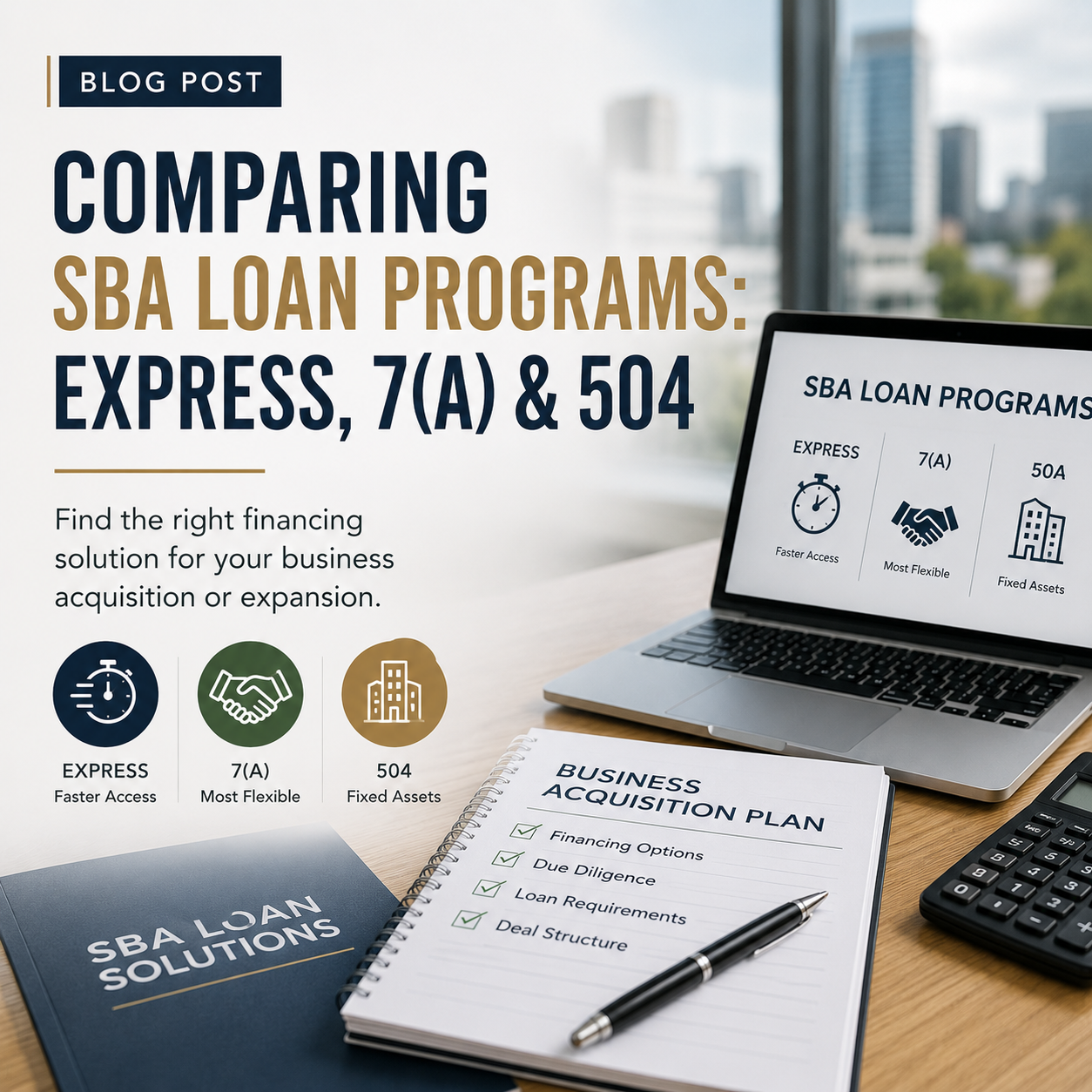
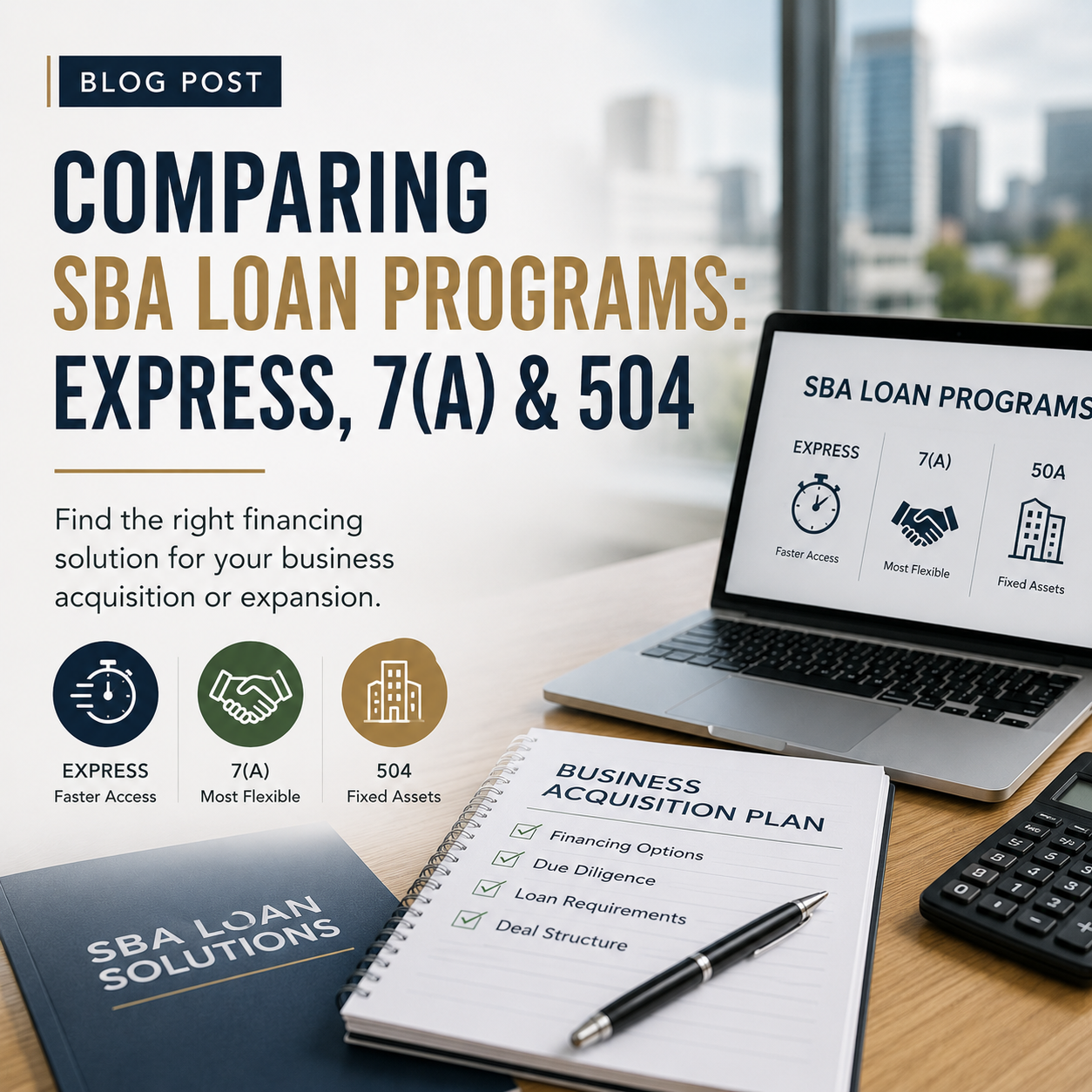
The SBA 7(a) loan program is a powerful, flexible solution for financing business acquisitions, offering up to $5 million with competitive terms. Funds can be used for asset or stock purchases (where permitted), goodwill, and post-closing working capital—making it the go-to option for most transactions. By comparison, the SBA 504 program is limited to fixed assets such as real estate, while SBA Express loans offer faster access to smaller amounts at higher rates. Most 7(a) loans require a 10–20% equity injection and personal guarantees, aligning borrower commitment with lender confidence while supporting a smooth, well-capitalized acquisition.
Borrower Requirements and Transaction Due Diligence
Securing SBA financing for an acquisition requires a focused, well-documented approach, whether through the versatile 7(a) program, the fixed-asset-focused 504 program, or the fast-track Express option. Lenders will expect comprehensive financials, including tax returns, financial statements, and projections, along with a credible business valuation or real estate appraisal, as applicable, to support the purchase price. Strong cash flow is key, with most transactions needing a debt service coverage ratio (DSCR) of at least 1.15x to demonstrate the business can comfortably support the debt.
Deal structure also plays a critical role. Seller notes are commonly used to bridge valuation gaps and may include standby terms to meet SBA requirements. For real estate transactions often financed through the 504 program, environmental reviews are required to ensure regulatory compliance. Across all SBA programs, proper change-of-ownership documentation is essential to confirm a clean transfer and align collateral and ownership with SBA guidelines. With the right structure and preparation, SBA financing can streamline approvals and position your deal for success.
Legal Risks in SBA-Financed Acquisitions
Successfully navigating an SBA-financed acquisition starts with the right structure and the right program. Whether using the flexible 7(a), the fixed-asset-focused 504, or the streamlined Express program, buyers must carefully evaluate asset versus stock purchases. Asset deals allow you to select assets and limit liabilities, while stock deals offer continuity but require careful negotiation to manage inherited risks. The right structure can significantly impact liability exposure, tax treatment, and long-term value.
Legal diligence is critical. This is especially true for real estate transactions under the SBA 504 program. Buyers must confirm zoning compliance, municipal approvals, and proper licensing to avoid costly disruptions post-closing. Environmental reviews are also required for applicable properties to identify and mitigate potential liabilities. Across all SBA programs, ensuring regulatory compliance upfront protects your ability to operate and safeguards your investment.
Timing can make or break a deal. Delays in SBA approvals, third-party consents, or regulatory clearances can stall or derail a transaction. Working with experienced counsel early helps streamline the process, address risks proactively, and keep your deal on track. Our team guides clients through every stage of SBA financing, from structuring the transaction to closing, so you can move forward with confidence and position your business for growth.
-
Yes, an SBA 7(a) loan can be used to finance the purchase of a professional practice in New York, provided the practice qualifies as a small business, and the transaction complies with SBA guidelines, including appropriate goodwill and asset valuations.
-
Seller financing can be part of an SBA 7(a) loan structure, but it must be subordinated to the SBA loan and adhere to specific terms, such as stand-by periods, to ensure the loan meets SBA approval and collateral coverage requirements.
-
When acquiring a business that owns real property, an environmental review is required to identify any potential contamination, and may include a Phase I Environmental Site Assessment to comply with SBA and federal regulations.




.png?content-type=image%2Fpng)