
Background
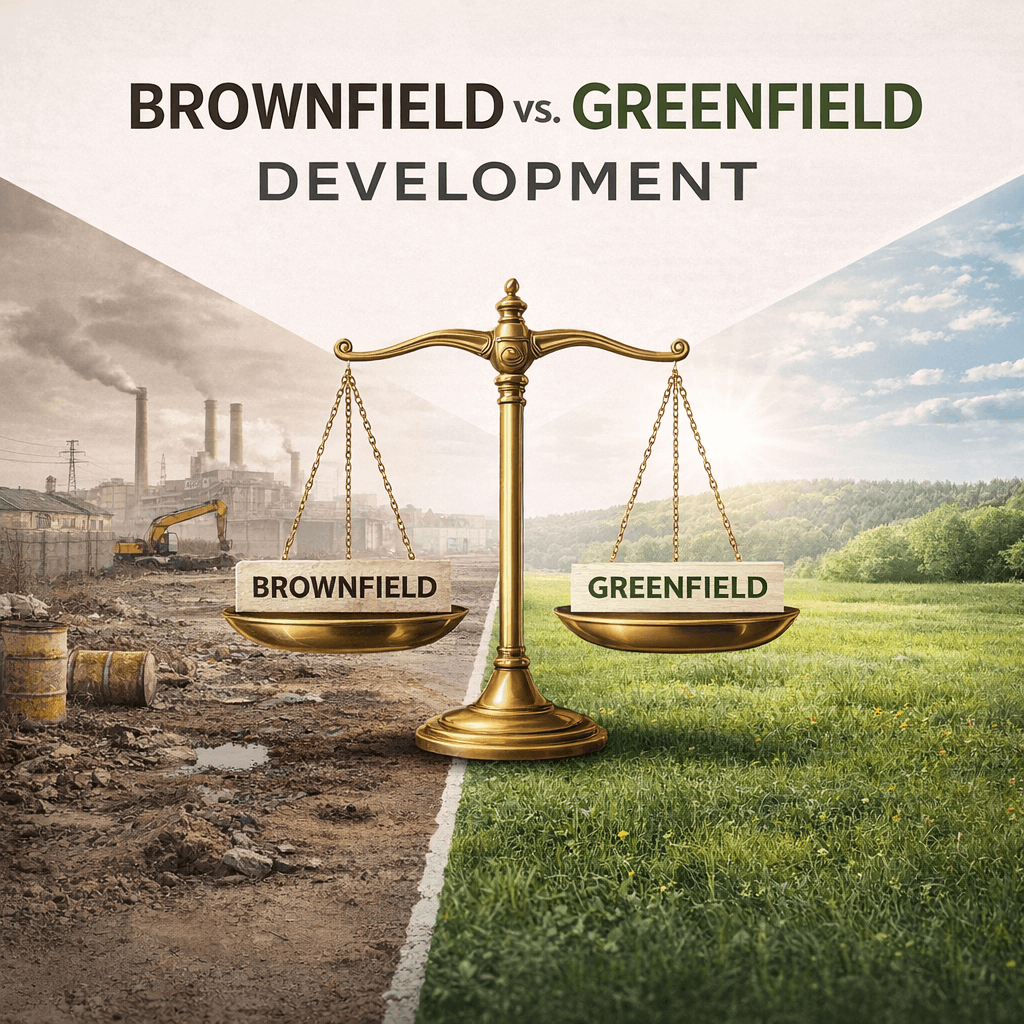
What is the difference between a brownfield and a greenfield site? Brownfield sites are previously developed properties that may require environmental remediation, but they often come with prime locations, existing infrastructure, and opportunities for revitalization. Greenfield sites, by contrast, are undeveloped parcels that offer a true blank slate—allowing developers maximum flexibility to design and build from the ground up. Each option presents distinct advantages and trade-offs, making the choice a strategic decision that can shape a project’s cost structure, timeline, and long-term market potential. Through the Firm’s environmental practice, we can advise and assist with compliance and risk management throughout the development of a brownfield or greenfield site.
Table of Contents
Which Type of Site is Better?
Brownfield and greenfield developments each offer compelling advantages depending on a project’s goals and market strategy. Brownfield sites are often located in established, centralized areas with existing infrastructure and transportation access—key factors that can drive demand, visibility, and long-term financial performance. In addition, many municipalities actively encourage brownfield redevelopment by offering tax incentives, grants, and other public-sector support to offset remediation costs and accelerate revitalization. While redevelopment can require additional time and investment to remediate environmental issues or modernize existing structures, these challenges are frequently balanced by location-driven value and incentive programs.
Greenfield projects, by contrast, typically offer lower upfront land costs, faster construction timelines, and greater flexibility in site layout and building design. However, these sites are often located farther from urban cores and may require zoning approvals, infrastructure extensions, and utility upgrades to support development. These additional requirements can increase project complexity and reduce immediate access to dense, high-demand markets. Ultimately, the choice between brownfield and greenfield development presents a strategic trade-off between location-driven opportunity and development speed and flexibility.
The Brownfield Cleanup Program & SEQRA Requirements
New York State offers powerful tools to turn complex sites into high-value development opportunities. The New York State Brownfield Cleanup Program (BCP) was designed to incentivize private-sector investment in the cleanup and redevelopment of underutilized properties. Through the BCP, developers can access liability protections and some of the most generous tax credits available nationwide—significantly enhancing project feasibility and return on investment. Eligible brownfield sites typically involve the presence of hazardous substances above the allowed levels, as per New York State Department of Environmental Conservation (DEC) cleanup standards, for the site’s intended use. Still, the program transforms these challenges into opportunities for redevelopment, revitalization, and long-term value creation.
Complementing the BCP, the New York State Environmental Quality Review Act (SEQRA) provides a comprehensive framework that guides development on both brownfield and greenfield sites. For brownfield projects, SEQRA focuses on evaluating remediation plans, managing potential exposure risks, and ensuring that redevelopment protects public health and the environment. Greenfield developments, by contrast, are reviewed with an emphasis on minimizing impacts to surrounding natural resources, including wildlife, agricultural land, and water bodies. Together, these regulatory pathways help balance responsible environmental stewardship with strategic, forward-looking development across New York State.
Why Does This Matter?
Navigating the regulatory landscape for brownfield and greenfield development projects requires precision, experience, and a deep understanding of highly technical requirements. These projects often trigger overlapping rules governing liability, remediation, and environmental review, leaving little room for error. Missteps—whether from misunderstanding or overlooking key obligations—can lead to costly delays, regulatory penalties, revoked approvals, and even litigation. Having a clear strategy for compliance and risk management is not just beneficial; it is essential to protecting your investment and keeping your project on track.
The West Firm brings the insight and experience needed to move your project forward with confidence. Our attorneys provide end-to-end guidance for SEQRA and BCP matters, supporting clients at every stage of development—from planning and approvals to remediation and redevelopment. When you need a trusted legal partner to help you navigate complex environmental regulations and unlock the full potential of your site, The West Firm is here to help. Contact us today to discuss how we can support your development goals.
-
A brownfield can never technically become a greenfield—once land has been developed or used for industrial or commercial purposes, that designation is permanent. However, a fully remediated brownfield can achieve the same practical result: unrestricted use and design flexibility comparable to a greenfield, while often benefiting from a superior location and redevelopment incentives.
-
One of the most common hidden costs in greenfield projects is addressing unforeseen environmental impacts. Under SEQRA, review extends beyond ground disturbance to include a project’s effects on wildlife habitats and migration patterns—factors that can significantly influence design, timelines, and budgets. Anticipating and managing these considerations early can be the difference between a smooth approval process and costly, unexpected delays.
-
Brownfield sites may qualify for redevelopment incentives when contaminants are present above cleanup standards established by the DEC, opening the door to valuable tax credits and financial benefits. While certain exceptions apply and not all properties are eligible, the opportunity can be significant. If you are evaluating a property or considering an acquisition, our team can help determine eligibility and develop strategies to maximize available tax credits.



.png?content-type=image%2Fpng)